Step 7: Patience is Key
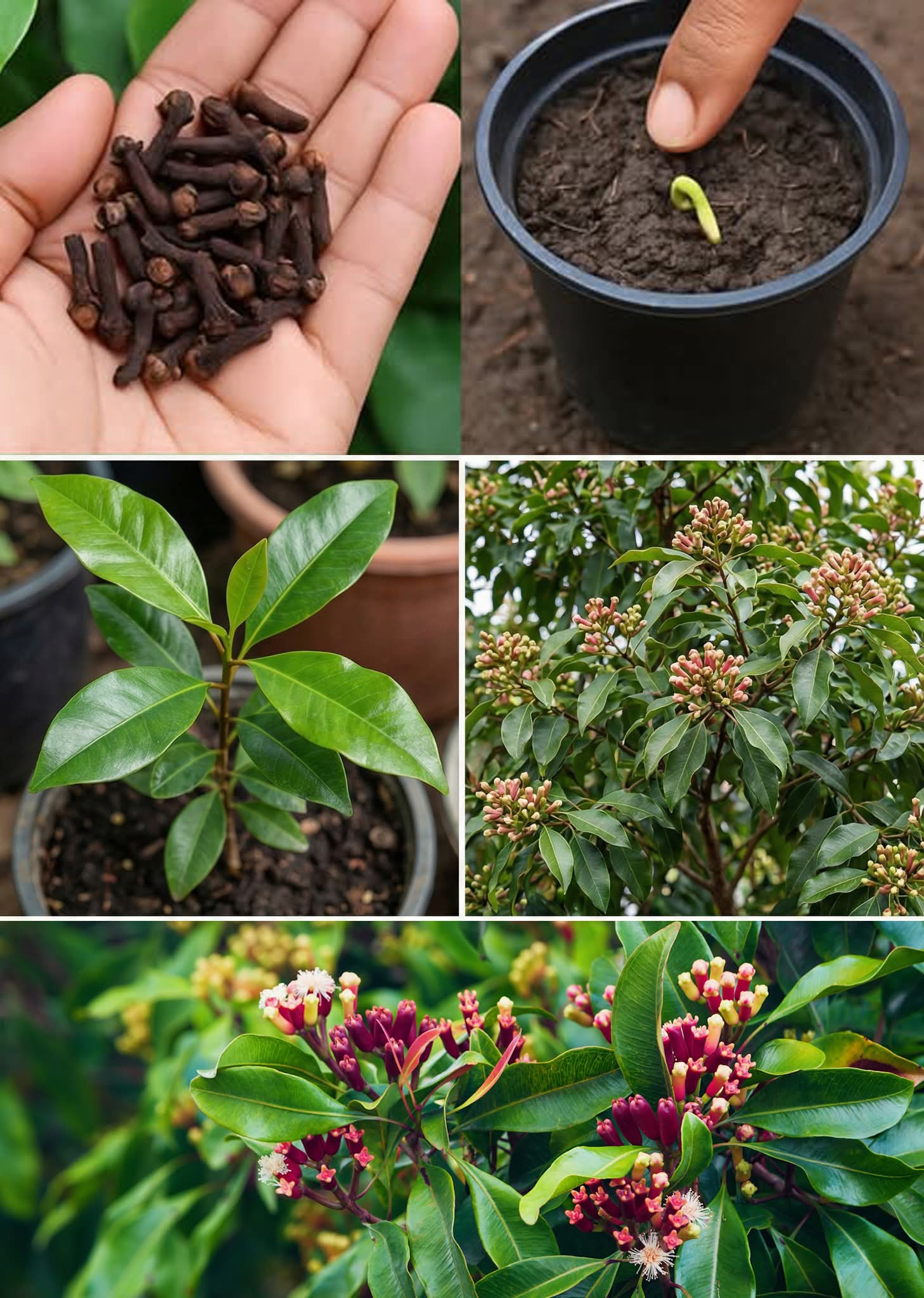
Cloves are slow-growing tropical plants, and it may take several years for them to mature and produce flower buds. However, once established, they are long-lived and will continue to produce fragrant buds for years. Regular care—consistent watering, fertilizing, and protecting from extreme conditions—ensures strong growth and healthy flowering.Flora & Fauna
Extra Tips for Success
Seedlings vs. seeds: Seedlings may be easier to grow and bloom faster, but seeds are more accessible and affordable.
Drainage matters: Always ensure pots have holes, and soil is light enough to prevent root rot.Crops & Seed
Temperature control: Clove plants thrive in warmth; if you live in a cooler climate, use indoor pots or a greenhouse.
Patience and observation: Monitor seedlings daily for moisture levels, light exposure, and signs of disease.
Conclusion
Growing cloves at home is surprisingly simple with the right approach. Even beginners can succeed by following a few straightforward steps: obtain fresh seeds, use fertile soil, maintain warmth and moisture, and provide patience and consistent care. The reward is a beautiful, aromatic clove plant that not only perfumes your home naturally but also provides fresh, homegrown cloves for cooking and health remedies.
By starting today, you can enjoy the fragrance, flavor, and satisfaction of growing your own cloves—all from the comfort of your home. This simple method ensures that anyone, regardless of gardening experience, can cultivate these exotic and versatile plants.Flora & Fauna